
RF Board Unique
RF boards are different from standard PCBs because they handle radio frequencies, typically in the gigahertz range. They use unique design techniques and materials to process high-speed analog or digital signals with high signal-to-noise ratios. Understanding what makes an RF board unique is essential for selecting the right one for your application.
High-frequency signals generate significant heat, which can damage components if it isn’t managed effectively. To prevent this, RF PCBs are made with thermally robust materials that conduct and disperse heat efficiently. In addition, they may have special vias or heat sinks to further minimize thermal effects on the circuitry.
The material selection process for rf board is particularly important. Because of the high-frequency signals, the materials must be able to support high-loss transmission lines without degrading. This is best accomplished using a combination of woven glass, PTFE, and ceramics with high-loss factor and low coefficient of thermal expansion (CTE).
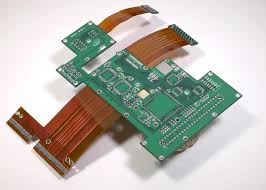
What Makes an RF Board Unique?
Another consideration when choosing a material for an RF board is its ability to resist moisture ingress. Moisture can cause the board to corrode over time, which will eventually degrade the electrical performance. This can result in poor signal integrity and shortened component lifespans.
An RF board must have a solid ground plane to minimize return paths and reduce interference. The ground plane can also be used to separate analog and digital circuitry on the board, which helps maintain signal integrity and improve overall performance. The layout of an RF board is also critical to its success. RF traces need to be short and avoid routing them near high-speed digital traces, power planes, or other noise sources. In addition, the layout should be designed to limit parasitic effects like unwanted inductance and capacitance.
RF modules can be attached to the RF board using either through-hole or surface-mount technology. Both methods require a soldering process to secure them in place. Unlike standard PCBs, RF modules must be made with specialized materials to ensure that they can withstand the stress of soldering and other environmental conditions. Often, these modules are plated in gold or silver to further enhance their performance and durability.
After a RF board is fabricated, it must undergo assembly to add the various components. RF components are usually placed with through-hole connections, but if you’re working with smaller modules, surface-mount technologies can be used to save space. The components are then inserted onto the board and soldered in place, a process known as reflow soldering.
This involves heating the solder until it melts, which bonds the metals and components to the board. For the reflow soldering process to be successful, it’s crucial that the temperature is maintained at exactly the right level. If the soldering is too hot, it can damage the RF circuitry. If the soldering is too cold, it can create impedance discontinuities and other issues. This is why reflow soldering requires special equipment, such as reflow ovens. In addition, reflow ovens must be equipped with sensors to monitor the exact temperature of the soldering.
